The modern living room has changed forever. Gone are the days when a family sat quietly focused on a single television set. Today, the glow of the TV is competed with—and often outshined by—the glow of smartphones, tablets, and laptops. For advertisers, this behavior was once seen as a distraction. Now, it is recognized as one of the most significant untapped goldmines in digital marketing.
Welcome to the era of Streaming + Second-screen ads. This powerful combination allows brands to synchronize their messaging across devices, turning a viewer’s fragmented attention into a cohesive, high-conversion user journey. If you aren’t leveraging this dual-screen behavior, you are leaving money on the table.
Below, we explore why this strategy is a game-changer and how you can implement it to dominate your market.
Why Streaming + Second-Screen Ads Are the Future
The statistics are undeniable. Recent studies indicate that over 85% of mobile users engage with a second device while watching TV. This behavior is even more prevalent among Gen Z and Millennials, who are almost constantly connected.
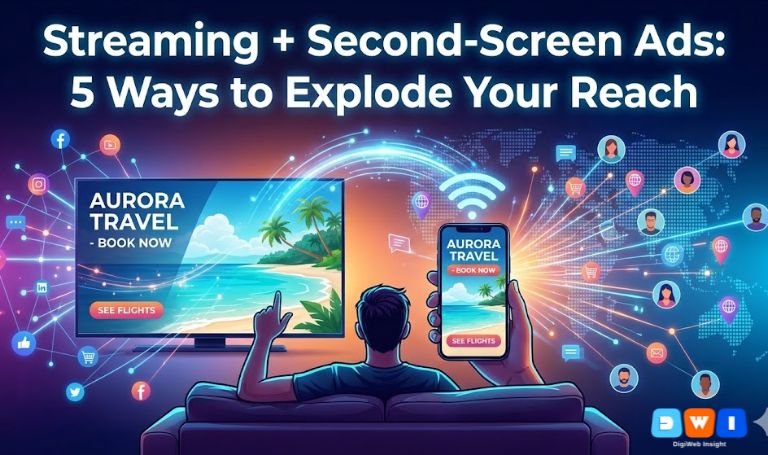
When we talk about Streaming + Second-screen ads, we are referring to the technology that links Connected TV (CTV) commercials with mobile advertising. Imagine a viewer seeing an ad for a running shoe on their Smart TV. Seconds later, a retargeting ad for that exact shoe appears on their Instagram feed or a news app they are browsing. This is not magic; it is the strategic application of Streaming + Second-screen ads.
This synchronization closes the loop between “awareness” (TV) and “action” (mobile). TV creates the emotional impact, while the second screen provides the immediate mechanism to buy, sign up, or learn more.
1. The Power of “TV Sync” Technology
The core engine driving Streaming + Second-screen ads is often called “TV Sync.” This technology uses Automatic Content Recognition (ACR) to identify what is playing on a user’s TV and trigger a corresponding ad on their mobile device.
For example, if you are a travel agency, you can set up a campaign that triggers a mobile display ad for “Cheap Flights to Paris” the moment a user watches a movie set in France or sees a competitor’s travel commercial. This immediacy drastically increases the relevance of your ad.
To implement this effectively, you need a robust digital foundation. Partnering with experts in web design and development ensures your landing pages are mobile-optimized and ready to convert the traffic flooding in from these synchronized campaigns.
2. Turning Distraction into Direct Response
Historically, TV ads suffered from a “attribution problem.” You knew people saw your ad, but you didn’t know if it led to a sale. Streaming + Second-screen ads solve this by moving the conversion point to the device already in the user’s hand.
A popular method is the use of QR codes on CTV ads. A viewer scans the code on their TV, and their phone instantly loads a product page. However, not everyone scans. This is where the “second screen” aspect shines. By running a concurrent Pay Per Click (PPC) marketing campaign that targets keywords related to your TV spot during its airtime, you capture those viewers who turn to Google to “search what they just saw.”
3. Enhancing Engagement with Social Integration
Social media is the most common “second screen” activity. Viewers love to tweet about live sports, discuss reality TV drama on Reddit, or browse TikTok during commercial breaks.
Streaming + Second-screen ads allow you to insert your brand into these conversations. If you are running a streaming ad during the Super Bowl or a popular series finale, your second-screen strategy should involve high-visibility social ads.
This creates a “surround sound” effect. The user sees you on the big screen and then sees you again in their personal feed. This repetition builds trust and keeps your brand top-of-mind. For businesses looking to dominate specific regions, combining this with a local strategy from an affordable SEO agency in the USA can help you capture local search intent generated by national streaming ads.
4. Data-Driven Personalization
One of the biggest advantages of Streaming + Second-screen ads is data. Unlike traditional cable, streaming platforms (like Hulu, Roku, or YouTube TV) offer precise targeting based on user data.
When you combine this with mobile data, you get a 360-degree view of your customer. You can target specific households with a TV ad and then follow up with a personalized offer on their mobile device based on their browsing history.
For instance, a viewer might see a generic car commercial on TV. But on their phone, the Streaming + Second-screen ads strategy serves them a specific offer for a dealership near them, complete with a “Book a Test Drive” button. This level of personalization significantly lowers the cost per acquisition.
5. The “Shoppable” Moment
The ultimate goal of advertising is the transaction. We are moving toward a world where Streaming + Second-screen ads facilitate instant purchases. “Shoppable TV” is rising, where viewers can send a product from their TV to their phone with a single click of their remote.
While this tech is still maturing, you can simulate it now. Ensure your mobile ads linked to your streaming campaigns lead to high-speed, frictionless checkout pages. If your site is slow, you lose the impulse buy.
If you are unsure where to start with optimizing your digital presence for this kind of traffic, visiting DigiWeb Insight can provide the roadmap you need to modernize your infrastructure.
Conclusion: Don’t Fight the Second Screen
Advertisers used to fear the second screen as a distraction. Now, we know it is actually an engagement multiplier. By embracing Streaming + Second-screen ads, you turn a passive viewing experience into an active, multi-channel journey.
The technology is here, the audience is ready, and the ROI is proven. Whether you are a small business or a large enterprise, integrating your streaming and mobile strategies is the smartest move you can make in 2025.
Start small: align your PPC keywords with your streaming schedule, ensure your website is mobile-perfect, and watch your engagement numbers climb.