
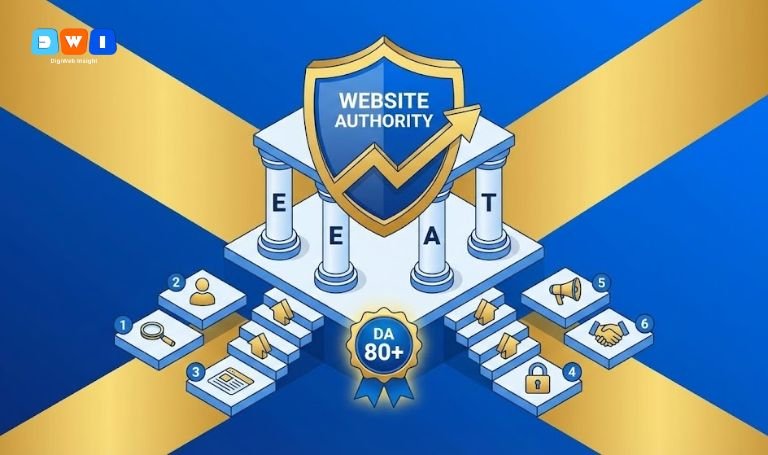
Is your traffic stagnant despite publishing great content? The missing piece of the puzzle might be your site’s perceived trust. Learning How to Improve Website Authority (DA & EEAT) is the definitive way to signal to Google that you are a leader in your industry.
In the modern search landscape, simple keyword stuffing is dead. Google now prioritizes brands that demonstrate Experience, Expertise, Authoritativeness, and Trustworthiness (E-E-A-T). Simultaneously, metrics like Domain Authority (DA) remain a useful benchmark for your competitive strength.
If you are ready to climb the rankings, this guide will show you exactly How to Improve Website Authority (DA & EEAT) using safe, long-term strategies.
Why Authority Matters More Than Ever
Authority is the currency of SEO. Without it, your pages fight an uphill battle. High authority helps you rank faster, index quicker, and withstand algorithm updates.
To truly understand How to Improve Website Authority (DA & EEAT), you must tackle both the technical metrics (links) and the human metrics (trust).
1. Audit Your Backlink Profile
Domain Authority is heavily influenced by the quantity and quality of websites linking to you. A link from a reputable site is a “vote of confidence.”
- The Fix: Use tools to identify toxic links and disavow them.
- The Strategy: Focus on earning links from niche-relevant sites rather than spammy directories.
For a professional analysis of your link profile, consider working with an Affordable SEO Agency in USA to identify gaps your competitors are exploiting.
2. Showcase Real Experience (The Extra “E”)
Google added “Experience” to E-A-T for a reason. AI can write generic text, but it cannot have real-world experience.
- Actionable Tip: Use first-person language (“I tested this,” “We found that”).
- Visual Proof: Include original photos or videos of you using the product or service.
3. Create “Link-Worthy” Content Assets
You cannot master How to Improve Website Authority (DA & EEAT) without content that people naturally want to share. This includes original research, infographics, or free tools.
If your site’s layout looks amateurish, users (and potential linkers) will bounce immediately. Investing in high-quality Web Design & Development ensures your content looks authoritative and credible.
4. Improve Author Transparency
Who is writing your content? If it is just “Admin,” your trust score suffers.
- Create detailed author bios.
- Link to the author’s LinkedIn or Twitter profiles.
- Highlight their credentials and years of industry experience.
5. Boost Technical Security and UX
Trustworthiness isn’t just about content; it is about safety. A slow, insecure site destroys trust.
- Ensure HTTPS is active.
- Fix broken links (404 errors).
- Improve Core Web Vitals (speed and stability).
6. Drive Engagement via Other Channels
Google looks for signals that you are a real brand. Traffic from social media, email newsletters, and paid ads helps validate your existence.
Running a targeted Pay Per Click (PPC) Marketing campaign can drive initial traffic to your high-value pages, signaling user interaction data to search engines while your organic SEO takes root.
Mastering How to Improve Website Authority (DA & EEAT)
Improving authority is a marathon, not a sprint. It requires a consistent dedication to quality. By building a network of strong internal links and earning high-quality external mentions, you incrementally increase your score.
Always remember that DA is a comparative metric—you just need to be higher than your direct competitors, not perfect.
Conclusion
Knowing How to Improve Website Authority (DA & EEAT) is the key to longevity in search results. By focusing on transparent authorship, technical excellence, and genuine relationship building, you secure your spot at the top.
Start by auditing your “About Us” page and your backlink profile today. Small changes in trust signals can lead to massive gains in rankings.
For a comprehensive approach to building your digital empire, visit DigiWebInsight.
To learn more about how Google assesses trust, read their official guide on Search Rater Guidelines.