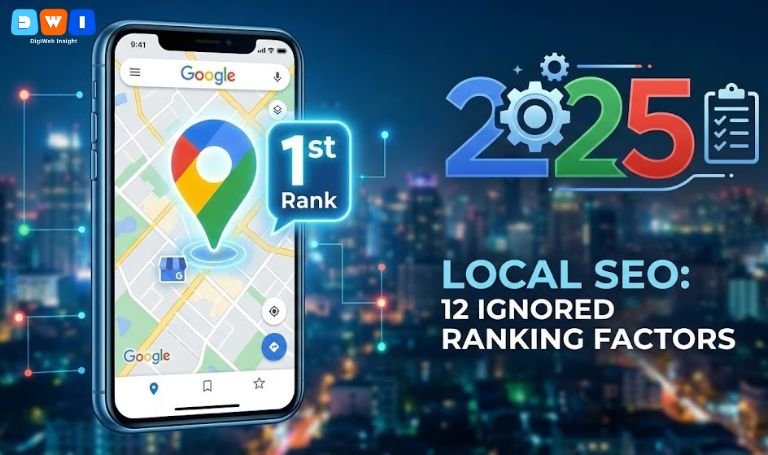
Is your phone ringing less often than it used to? If your Google Business Profile isn’t optimized for the new landscape of Local SEO in 2025, you are invisible to your neighbors.
The “Map Pack”—those top three local business listings—is the most valuable real estate on Google. With the rise of AI-driven search and “zero-click” results, customers aren’t browsing websites; they are making decisions directly on Maps.
To dominate your local market, you need more than just a verified address. This 12-step guide covers the critical factors most businesses overlook.
Why Local SEO in 2025 is Different
The shift towards Local SEO in 2025 is driven by hyper-relevance and user behavior. Google’s algorithms now prioritize “trust signals” over simple proximity. They want to know if you are active, reliable, and truly local.
If you are treating your profile like a static phonebook entry, you are falling behind.
The 12-Step Google Maps Ranking Guide
Follow this checklist to boost your visibility and secure your spot in the coveted Map Pack.
1. Complete Every Data Point
Google hates ambiguity. Ensure every field—from your opening date to your accessibility features—is filled. A 100% complete profile signals legitimacy.
2. Select Primary and Secondary Categories Carefully
This is often the biggest needle mover. Don’t just pick one category. If you are a law firm, list specific practice areas like “Divorce Lawyer” or “Estate Planning Attorney” as secondary categories.
3. Optimize Your Business Description
Write a natural description that includes your main services and location. While you should mention Local SEO in 2025 strategies like localized keywords, keep it readable for humans, not just bots.
4. Drive Review Velocity and Quality
It’s not just about 5 stars anymore; it’s about recency and keywords within reviews. Ask customers to mention the specific service they bought. “Best pizza in town” is good; “Best pepperoni pizza in downtown Chicago” is gold.
5. Upload Geo-Tagged Photos Regularly
Visual search is massive. Upload photos of your team, office, and completed projects. Google’s AI analyzes these images to confirm you provide what you say you do.
6. Use Google Posts for Weekly Updates
Treat your Business Profile like a social media feed. Post offers, events, or blog snippets weekly. This activity signal tells Google your business is alive and thriving.
7. Add Your Products and Services
Don’t rely on Google to guess what you sell. Manually add your products and services with descriptions and prices. This helps you rank for specific “near me” queries.
8. Leverage the Q&A Section
Most businesses ignore this. Pre-populate your Q&A with common customer questions (and answers!) that contain relevant keywords. It improves user experience and relevance.
9. Embed a Google Map on Your Contact Page
Connect your website to your GMB profile. Embedding a map on your site reinforces your location data. If your site needs a structural overhaul, consider professional web design and development to ensure seamless integration.
10. Build Niche-Specific Local Citations
Consistency is key. Your Name, Address, and Phone number (NAP) must be identical across Yelp, Yellow Pages, and industry directories. Inconsistent data confuses Google.
11. Create Location-Specific Landing Pages
If you serve multiple areas, create unique pages for each city. Don’t just swap the city name; add unique content. If this sounds complex, an affordable SEO agency in USA can help structure these pages correctly.
12. Monitor Core Web Vitals
Google Maps ranking is tied to your website’s performance. If users click through to your site and bounce because it loads slowly, your map ranking drops.
Advanced Strategy: Integrating Paid & Organic
Sometimes, organic growth takes time. While you wait for your Local SEO in 2025 efforts to kick in, you can capture immediate local traffic using Pay Per Click (PPC) marketing. Running “Local Services Ads” ensures you appear right at the very top, even above the Map Pack.
Note: Google’s “Openness” signal is stronger than ever. If your hours are listed as “Open,” but you don’t answer the phone, Google may track that unresponsiveness and lower your rank.
Conclusion
Mastering Local SEO in 2025 isn’t about tricking the system; it’s about providing the most accurate, helpful data to your neighbors. By following this 12-step checklist, you build the trust signals Google craves.
Don’t let your competitors steal your local customers. Open your Google Business Profile right now and start with Step 1.
For more deep dives into search trends, reputable sources like Moz’s Local SEO Learning Center offer excellent data on changing algorithms.