
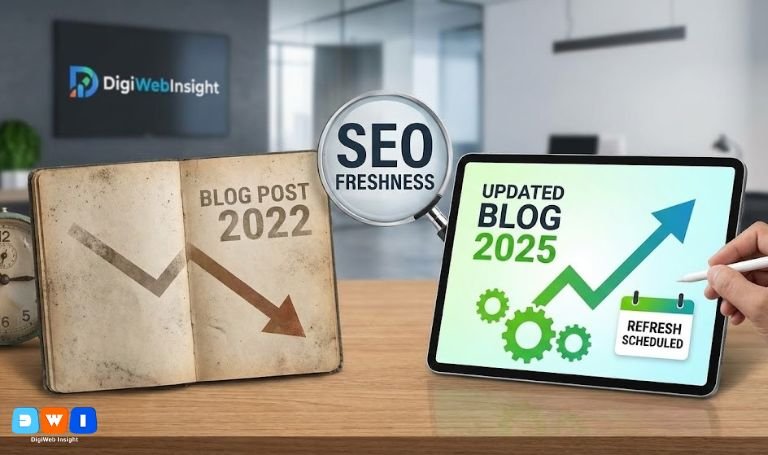
You published a fantastic article two years ago. It brought in steady traffic, generated leads, and positioned you as an expert. But recently, you have noticed a decline. The traffic is drying up, and your rankings are slipping.
This is a common frustration for many site owners. The internet is not static; it is a living, breathing entity. Content that was “king” in 2023 might be obsolete today. This leads to the pressing question: how often should a small business update old blog posts for SEO to stay competitive?
The answer isn’t just about changing a date stamp. It involves understanding how Google views “freshness” and alignment with current user intent. Ignored content eventually decays, dragging your entire site’s authority down with it.
Below, we explore the ideal timelines for updates and the specific strategies you need to revive your dying traffic.
Why Freshness Matters for SEO
Before diving into the schedule, it is vital to understand why you are doing this. Google prioritizes content that demonstrates E-E-A-T (Experience, Expertise, Authoritativeness, and Trustworthiness).
If your “Ultimate Guide to Instagram Marketing” references features that were removed in 2022, you lose Trustworthiness. Users will bounce immediately, signaling to Google that your content is no longer helpful.
By refreshing content, you tell search engines: “This is still relevant, accurate, and valuable.” This simple signal can often yield a higher ROI than writing a brand-new article from scratch.
How Often Should a Small Business Update Old Blog Posts for SEO?
There is no one-size-fits-all answer, but there are clear guidelines based on the type of content you manage. To determine how often should a small business update old blog posts for SEO, categorize your articles into these three buckets:
1. High-Performance Evergreen Content (Every 6 to 12 Months)
This is your bread and butter—the “How-To” guides and service explanations that consistently drive leads. Even if the core advice hasn’t changed, user trends do.
- Action: Review these annually. Update statistics, refresh images, and ensure all external links still work.
- Tip: If you see a sudden traffic drop, update immediately regardless of the timeline.
2. Time-Sensitive Industry News (Immediately or Quarterly)
If you write about “Tax Laws for 2024” or “Social Media Trends,” this content expires quickly.
- Action: These posts need frequent attention or should be rewritten entirely as new yearly editions.
- Tip: If the topic is dead, considering 301 redirecting the URL to a newer, relevant post.
3. Low-Performance Content (During Quarterly Audits)
Some posts never took off. Instead of letting them bloat your site index, you need to make a decision.
- Action: Audit these quarterly. Can you rewrite them to be better? If not, it might be time to delete or consolidate them.
5 Critical Strategies for Updating Content
Knowing how often should a small business update old blog posts for SEO is only half the battle. You also need to know how to do it effectively.
1. Match the Current Search Intent
User behavior changes. Two years ago, people might have searched for “what is SEO.” Today, they might be searching for “AI in SEO.” If your old post doesn’t address the current nuances of the topic, it won’t rank. Look at the current top 3 results for your keyword and see what they are covering that you are missing.
2. Deepen the Content (Quality Over Quantity)
Thin content rarely ranks well. If your old post is 500 words and your competitors are writing 2,000 words, you need to expand. Add more examples, clearer steps, and better formatting.
- Use bullet points.
- Add FAQs.
- Include expert quotes.
For expert help in structuring your site’s content hierarchy, consider consulting with a Web Design & Development professional.
3. Refresh Your Internal and External Links
Broken links are SEO poison. During your update, click every link to ensure it is active. More importantly, add internal links to newer content you have written since the original publication.
- Link to your Affordable SEO Agency USA page if you mention hiring help.
- Link to Pay Per Click (PPC) Marketing if discussing traffic alternatives.
Also, ensure you have at least one high-quality external link. For example, linking to Google’s Search Central documentation adds credibility to your claims about SEO rules.
4. Update Visuals and Media
Nothing screams “outdated” like a screenshot of an interface from 2015. Replace old stock photos with modern visuals, infographics, or even a video summary. Visuals keep users on the page longer, which improves your “Dwell Time” ranking signal.
5. Re-Promote After Updating
Don’t just hit “update” and walk away. Treat a major refresh like a new launch. Share it on social media, include it in your newsletter, and request Google to re-crawl the URL via Search Console.
The “Query Deserves Freshness” (QDF) Factor
Google has a ranking component known as QDF (Query Deserves Freshness). For certain topics—like “best iPhone” or “election results”—Google will always prioritize the newest content.
If you are targeting keywords that trigger QDF, the answer to how often should a small business update old blog posts for SEO changes from “annually” to “weekly” or “monthly.” Check the dates on the current top ranking results. If they are all from the last month, you have your answer.
Conclusion
Ignored content is a wasted asset. By establishing a regular schedule to review and polish your archives, you can stabilize your traffic and improve your overall domain authority.
Start by auditing your top 10 performing posts this week. Check their facts, fix their links, and ensure they answer the user’s questions better than anyone else.
For a comprehensive strategy on how to align your content updates with your overall digital presence, visit DigiWebInsight.