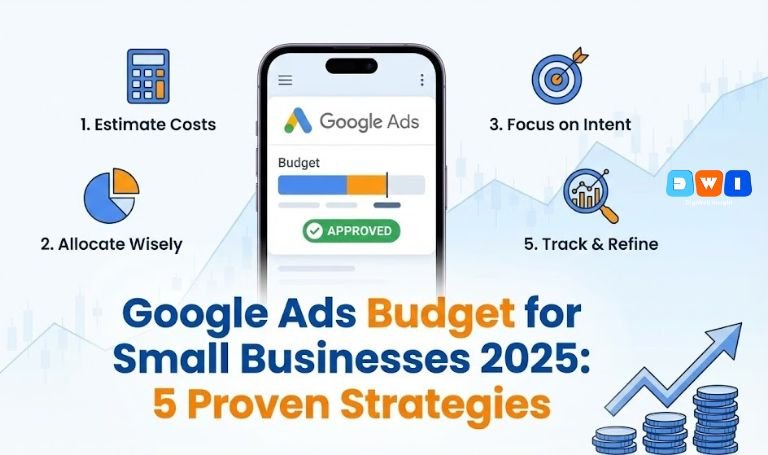
Setting the right Google Ads Budget for Small Businesses 2025 is one of the most critical decisions you will make this year. With inflation fluctuating and competition rising, throwing money at ads without a plan is a recipe for disaster.
However, when optimized correctly, Google Ads remains the fastest way to drive consistent leads. Whether you are a local bakery or a growing SaaS company, understanding how to allocate your funds in the age of AI and automation is essential. This guide will break down exactly how much you should spend and how to make every dollar count.
1. How Much Should You Spend in 2025?
There is no single magic number, but industry data gives us a solid starting point. For most small businesses, a healthy starting budget typically falls between $1,000 and $3,000 per month. This range allows enough data for Google’s AI to learn and optimize your campaigns.
If you are in a high-ticket industry like legal or insurance, your Google Ads Budget for Small Businesses 2025 might need to be higher, closer to $5,000+, due to higher Cost Per Clicks (CPCs). Conversely, local service businesses might see results with as little as $500 to $800 if targeting is hyper-local.
The “Test and Scale” Approach
Don’t commit your entire annual marketing fund on day one. Start with a “testing budget” for the first 90 days.
- Month 1: Data gathering (high CPCs, low conversion efficiency).
- Month 2: Optimization (identifying negative keywords, refining ads).
- Month 3: Scaling (increasing budget on winning campaigns).
2. The 70-20-10 Budget Allocation Rule
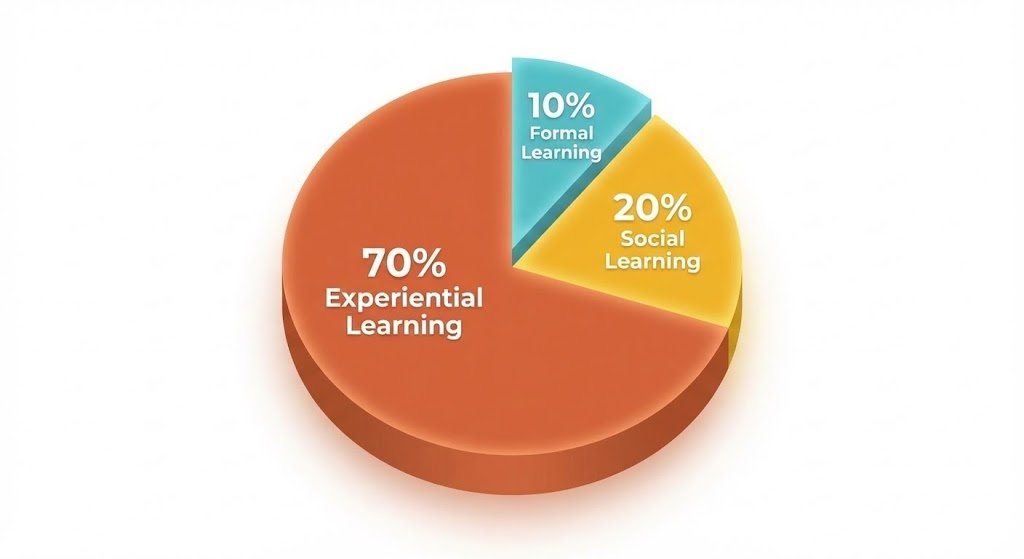
To keep your Google Ads Budget for Small Businesses 2025 safe while aiming for growth, use the 70-20-10 rule.
- 70% on “Evergreen” Campaigns: Spend the bulk of your money on what you know works. These are your bottom-of-funnel search terms like “buy running shoes” or “plumber near me.”
- 20% on “Expansion”: Use this to test new keywords or audiences that are slightly broader but still relevant.
- 10% on “Experiments”: This is your “lab” money. Test new 2025 features like AI Max campaigns or Demand Gen ads. If they fail, you haven’t ruined your month. If they win, you have found a new goldmine.
3. Account for 2025 Industry CPC Benchmarks
Your budget must reflect the reality of your specific industry. In 2025, average CPCs have shifted due to increased AI competition.
| Industry | Est. Avg CPC (2025) | Rec. Monthly Budget |
| Legal | $6.00 – $9.00 | $3,000+ |
| Retail/Ecom | $1.50 – $3.50 | $1,500+ |
| Home Services | $4.00 – $7.00 | $2,000+ |
| Real Estate | $2.50 – $5.00 | $2,500+ |
Data estimated based on current keyword trends.
If your industry has a high CPC, you cannot survive on a $10/day budget. You will get 1-2 clicks, which isn’t enough for the algorithm to find you customers.
4. Leverage AI Without Bleeding Cash
A major factor affecting your Google Ads Budget for Small Businesses 2025 is how you handle automation. Google’s Performance Max (PMax) campaigns are powerful but can be budget vampires if left unchecked.
The “Feeder” Strategy
Instead of giving PMax your full budget immediately, run a Standard Shopping or Search campaign first. Use high-intent keywords here. Once these campaigns generate conversions (data), “feed” this data into PMax. This prevents the AI from spending your hard-earned money testing irrelevant audiences.
For expert help setting this up, consider consulting an Affordable SEO Agency USA that specializes in hybrid PPC strategies.
5. Focus on “Commercial Intent” Keywords
The quickest way to drain a small budget is bidding on informational keywords.
- Bad Keyword: “how to fix a leaky pipe” (User wants a DIY video).
- Good Keyword: “emergency plumber price” (User has a credit card in hand).
By aggressively adding Negative Keywords, you ensure your Google Ads Budget for Small Businesses 2025 is only spent on people ready to buy. This increases your conversion rate and lowers your Cost Per Acquisition (CPA).
Pro Tip: In 2025, voice search is huge. Ensure you target natural language phrases like “best marketing agency near me open now.”
Essential Budgeting Checklist for 2025
- Set a Max CPC Cap: Don’t let the auto-bidding go wild.
- Use Location Exclusions: Don’t pay for clicks from 500 miles away.
- Track Everything: If you aren’t tracking conversions, you are burning money.
Conclusion
Defining your Google Ads Budget for Small Businesses 2025 requires a mix of industry awareness and financial discipline. Start with a realistic amount based on CPC data, use the 70-20-10 rule to manage risk, and lean into high-intent keywords to secure quick wins.
Smart spending always beats heavy spending. By following these steps, you can compete with larger brands without breaking the bank.
For more insights on building a holistic digital strategy, explore our resources on Web Design & Development to ensure your site converts the traffic you buy.
- External Resource: For official tools to estimate your costs, use the Google Ads Keyword Planner.
- Internal Resource: Visit DigiWebInsight to grow your business online.
- Internal Resource: Learn more about Pay Per Click (PPC) Marketing.