Here is an SEO-optimized guide on fixing low organic CTR, written following specified guidelines, EEAT principles, and a natural, helpful tone.
How to Fix Low Organic CTR in Google Search: 7 Powerful Techniques
You have done the hard work. Your website is finally ranking on the first page of Google for your target keywords. You check your analytics, expecting a flood of traffic, but see only a trickle. You are getting high impressions, but very few clicks.
This is a common and frustrating scenario for many website owners. Ranking high is only half the battle; convincing users to choose your link over competitors is the other half.
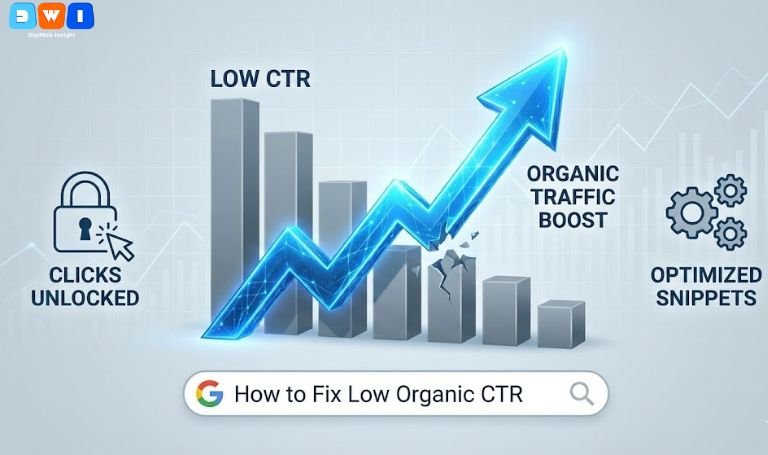
If you are struggling to turn visibility into actual visitors, you need to learn how to fix low organic CTR in Google Search. A low click-through rate (CTR) signals to Google that your result might not be relevant, which can eventually hurt your rankings.
This guide will outline seven proven strategies to make your search listings irresistible and boost your traffic without needing higher rankings.
Understanding Why Your CTR Is Low
Before diving into solutions, it is vital to understand the problem. Your organic CTR is the percentage of people who see your link (impressions) and actually click on it.
If your CTR is low despite good rankings, it usually means your “search snippet”—the combination of your title, meta description, and URL—isn’t compelling enough. It might be boring, irrelevant to the user’s intent, or simply getting lost among visually richer results like ads or featured snippets.
Fixing this is often the fastest way to increase traffic because you don’t need to build new links or write massive new guides; you just need to optimize what you already have.
Here is how to fix low organic CTR in Google Search using seven powerful, actionable techniques.
1. Front-Load Your Focus Keyword in Titles
Your SEO title tag is the single most important element for influencing CTR. In mobile search results, titles are often truncated. If your main topic appears at the end of a long title, users might never see it.
Ensure your main keyword appears within the first 50-60 characters. By putting the most relevant information first, you immediately signal to the user that your page has the answer they are looking for.
2. Inject “Power Words” and Emotion
Dry, descriptive titles rarely get clicks. Humans are emotional decision-makers. To stand out, your titles need to evoke curiosity, urgency, or the promise of a solution.
Incorporating “power words” can dramatically improve your click-through rate. Words like Proven, Powerful, Easy, Fast, Complete, or Essential add weight to your headline.
Furthermore, titles with a strong positive or negative sentiment tend to outperform neutral ones. For example, instead of “SEO Tips for CTR,” try “7 Powerful Ways to Crush Low CTR.”
3. Treat Meta Descriptions Like Ad Copy
While meta descriptions are not a direct ranking factor, they are critical for CTR. Think of the description as your elevator pitch to win the click.
If you don’t write a custom meta description, Google will pull random text from your page, which is rarely ideal. A good description should include your focus keyword naturally and provide a clear value proposition. Why should they click your result instead of the one above it?
According to Google Search Central documentation on creating good snippets, descriptions should truly summarize the content and entice users.
4. Align Your Snippet with Search Intent
Nothing kills CTR faster than a mismatch between what a user wants and what your title promises.
If someone searches for “best running shoes,” they likely want a comparison list, not the history of shoemaking. If your title doesn’t reflect the intent behind the search (informational, transactional, or navigational), users will skip it.
Review the top-ranking results for your keywords. Are they “how-to” guides, product pages, or lists? Match that format in your title and description to ensure users know you have what they need.
5. Optimize Your URL Structure
Your URL is often an afterthought, but it is displayed directly under your title in search results. A messy, long URL filled with numbers and symbols looks untrustworthy and spammy.
Keep your URLs short, clean, and readable. They should give a clear indication of what the page is about. Including your focus keyword in the URL reinforces relevance to both users and search engines.
- Bad URL:
website.com/blog/category/post-id-12345? - Good URL:
website.com/blog/fix-low-organic-ctr
If your current site structure produces messy URLs, it might be time to look into professional web design development to correct these foundational SEO issues.
6. Leverage Rich Snippets (Schema Markup)
In modern Google search, standard blue links can get lost. You are competing against image carousels, “People Also Ask” boxes, and ads.
One of the best ways to combat this is by implementing Schema markup to try and win “rich snippets.” These are enhanced search results that might show star ratings, FAQ drop-downs, or product pricing directly in the SERPs.
These visual elements make your listing take up more physical space on the screen and draw the eye, significantly boosting CTR even if you aren’t in the top position.
7. Test Headlines Using PPC
Sometimes, knowing exactly which headline will resonate with your audience is a guessing game. A highly effective, advanced strategy is to use paid search ads to test different copy.
By running a low-budget Google Ads campaign targeting your exact keyword, you can test dozens of different title and description combinations. Over a few weeks, the data will clearly show which ad copy gets the highest CTR.
You can then take that winning copy and apply it to your organic search listing. If you need assistance setting up these tests, a specialized Pay Per Click (PPC) marketing service can provide the data you need to improve your organic results.
Conclusion
Learning how to fix low organic CTR in Google Search is an ongoing process of testing and refining. By focusing on human psychology, writing compelling copy, and ensuring technical elements like URLs and Schema are correctly implemented, you can turn passive impressions into active site visitors.
Don’t let your hard-earned rankings go to waste. Start optimizing your snippets today.
For comprehensive support in improving your overall search presence, from technical audits to content strategy, consider partnering with DigiWeb Insight, a leading affordable SEO agency USA dedicated to driving real results.