
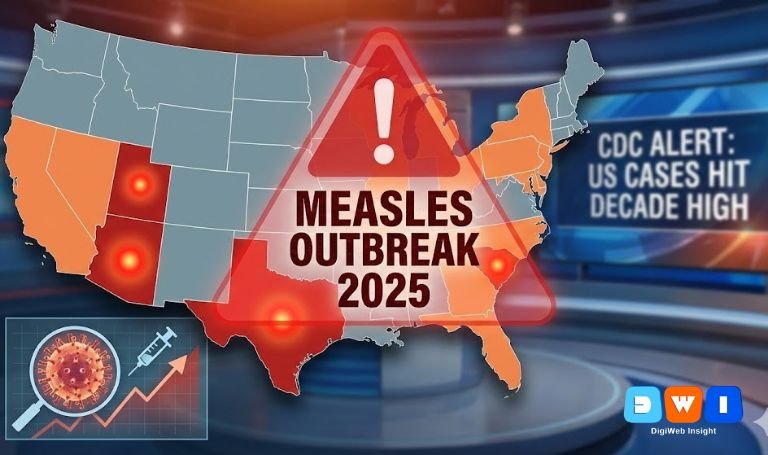
The United States, having declared measles eliminated in 2000, is facing an alarming resurgence, presenting a critical challenge for public health authorities and demanding close attention from international observers. As of early December 2025, the Measles Outbreak in the U.S. 2025 has reached the highest case count in over three decades, excluding the 2019 crisis. The rapid spread is overwhelmingly concentrated in pockets of low vaccination coverage, threatening to undermine decades of public health success.
The CDC reports a national total of 1,828 confirmed cases this year, spanning 43 U.S. jurisdictions, with 46 separate outbreaks defined by three or more linked cases. For global health experts, travelers, and policymakers, understanding the current status and drivers of this outbreak is paramount.
🦠 Current Status: The Spread and the Vulnerable
The sheer number of cases confirms that the Measles Outbreak in the U.S. 2025 is a serious public health event, primarily fueled by low immunization rates.
1. The Key Hotspots and Case Load
The outbreak began in earnest in early 2025, seeded by imported virus strains into close-knit communities with low vaccination uptake.
- Total Cases: 1,828 confirmed cases as of December 2, 2025, representing a massive increase compared to 285 cases in all of 2024.
- Leading States: The most concerning hotspots with ongoing community transmission are Arizona (155 cases, mostly in Mohave County), Utah (105 cases), and South Carolina (76 cases).
- Fatalities: Tragically, three confirmed deaths associated with measles have been reported this year in Texas and New Mexico, the first U.S. measles deaths since 2019.
- Hospitalization Rate: Approximately 12% of confirmed cases resulted in hospitalization, underscoring the severity of the infection.
2. The Unvaccinated Majority
Data consistently shows a direct link between low vaccination rates and the spread of measles. Nationally, 92% of all measles patients this year were either unvaccinated or had an unknown vaccination status. This figure highlights the dangerous immunity gaps that exist across the country.
- Impact of Undervaccination: The national vaccination rate for kindergarteners has dipped below the critical 95% threshold required for effective herd immunity, allowing the highly contagious virus to spread rapidly once introduced .
- Age Groups Affected: While measles is often seen as a childhood disease, 40% of cases occurred in the 5–19 age group, and 33% were in adults aged 20 and over, illustrating widespread susceptibility.
🌍 What International Observers Should Watch
For global health bodies, the media, and international travelers, the Measles Outbreak in the U.S. 2025 signals several important policy and health concerns.
1. The Threat of Re-Endemism
The most significant concern for international health organizations is the risk that the U.S. could lose its measles elimination status. Endemic measles transmission was halted in the U.S. in 2000. Sustained, widespread community transmission driven by low local vaccination rates could force the CDC to declare the virus endemic again—a major setback that would impact the global effort to eradicate the disease.
2. Travelers’ Health and Global Transmission
The CDC continues to emphasize that measles cases in the U.S. are primarily seeded by unvaccinated international travelers (or U.S. residents returning from areas with high global measles activity, such as Mexico or Canada).
- Recommendation for Visitors: International travelers planning to visit the U.S. must ensure they meet the recommended MMR vaccination guidelines prior to departure. This includes infants aged 6–11 months receiving an early dose if traveling internationally. (For guidance on other health precautions when traveling, consult general health advisories).
- Global Interconnection: The U.S. outbreak serves as a stark reminder of the global nature of vaccine-preventable diseases. The current rise in cases worldwide, driven by COVID-19 pandemic-related disruption in global vaccination programs, means the risk of importation into the U.S. remains high. (This global interconnectedness also relates to how businesses operate digitally; learn more about managing an international digital presence on our main site.)
3. Policy and Counter-Misinformation Efforts
Policymakers around the world are watching the U.S. response closely. A critical lesson is the need for proactive counter-misinformation strategies.
- Community Engagement: Public health efforts are now focusing on working with “trusted community messengers” to counter vaccine hesitancy, highlighting the failure of traditional public health messaging alone.
- Policy Implications: The crisis may trigger calls for stricter immunization requirements at the state level to regain the 95% herd immunity threshold. (Companies seeking to ethically advertise their services can learn more about regulatory compliance in our guide on Pay-Per-Click (PPC) Marketing.)
Addressing the Measles Outbreak in the U.S. 2025 requires a concerted effort to close immunity gaps, combat misinformation, and reinforce the vital role of vaccination in maintaining public health security.