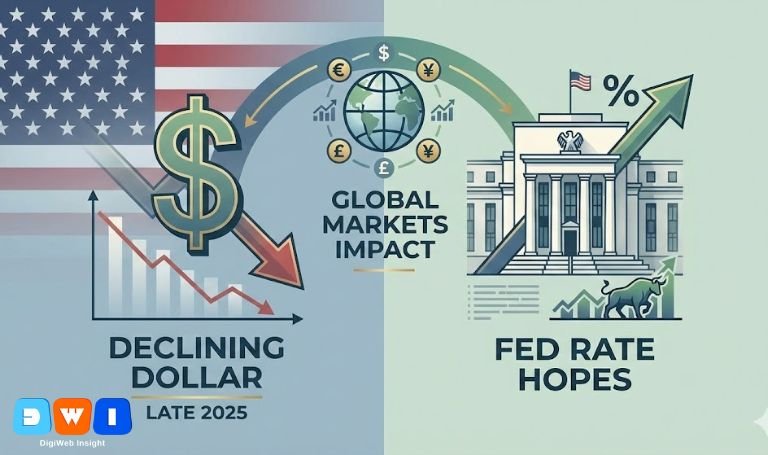
The U.S. Economy Outlook for late 2025 is dominated by a pivotal shift: the convergence of a softening labor market, a declining dollar, and renewed optimism for Federal Reserve rate cuts. As we approach the critical December 10 Federal Reserve meeting, global investors are repositioning their portfolios to navigate this changing landscape. With the U.S. dollar hitting recent lows and Treasury yields sliding, the ripple effects are being felt from Wall Street to emerging markets.
This analysis breaks down the current economic signals, the probability of a policy pivot, and exactly how these factors are reshaping the global investment terrain for 2026.
🇺🇸 The Current Landscape: A “Soft Landing” or Something Else?
The narrative for the U.S. economy has shifted from fears of overheating to a cautious monitoring of cooling growth.
1. Fed Rate Hopes Surge to 90%
Expectations for a Federal Reserve interest rate cut have solidified dramatically. Following weaker-than-expected labor data—specifically the ADP private payrolls report showing unexpected declines—markets are now pricing in an approximate 90% probability of a 25-basis-point rate cut at the December meeting.
- The “Insurance Cut”: Economists view this potential move not as a panic response to a recession, but as an “insurance cut” designed to prevent the labor market from cooling too rapidly.
- Yield Reaction: The bond market has reacted swiftly, with the 10-year Treasury yield dropping to around 4.06%, signaling that fixed-income investors are locking in rates before they fall further.
2. The Declining Dollar Phenomenon
The U.S. dollar (USD) is facing significant headwinds. The declining dollar is a direct result of the narrowing interest rate gap between the U.S. and other major economies.
- DXY Slide: The U.S. Dollar Index (DXY) has slid to levels not seen since October, breaking below key support levels.
- Seasonal Weakness: December is historically a weak month for the greenback, a trend that is exacerbating the current sell-off as traders unwind “long dollar” positions.
🌍 What It Means for Global Markets
The combination of a cheaper dollar and lower U.S. rates acts as a massive liquidity injection for the global financial system. Here is how different asset classes are responding.
1. Commodities and the “Debasement Trade”
As the dollar weakens, commodities priced in USD become cheaper for foreign buyers, typically driving up demand.
- Gold & Bitcoin: Investors are flocking to “hard assets” as a hedge against currency debasement. Gold remains a preferred safe haven, while Bitcoin has rebounded sharply, reclaiming the $93,000 level as liquidity conditions improve.
- Oil Prices: Crude oil prices are finding support from the weaker dollar, although demand concerns from China continue to cap significant gains.
2. Emerging Markets (EM) Breathing Room
A strong dollar often acts as a wrecking ball for emerging market economies, increasing their debt servicing costs and driving inflation. The reversal of this trend offers a crucial window of opportunity.
- Currency Relief: Currencies like the Indian Rupee and the South African Rand are seeing pressure ease. A weaker dollar allows EM central banks to cut their own rates to stimulate growth without crashing their currencies.
- Debt Servicing: For nations with heavy dollar-denominated debt, a declining dollar effectively reduces their repayment burden, improving sovereign credit outlooks.
3. European and Asian Equities
Global stock markets are largely cheering the prospect of cheaper U.S. capital.
- Europe: European indices have trended upward, buoyed by the hope that the Fed’s pivot will allow the European Central Bank (ECB) to continue its own easing cycle without devaluing the Euro too aggressively.
- Asia: The picture is mixed but generally positive. While tech-heavy markets align with Wall Street’s optimism, markets heavily dependent on exports to the U.S. are wary that a weaker dollar makes their goods more expensive for American consumers.
📊 Investor Action Plan for 2026
Navigating this U.S. Economy Outlook requires a strategic shift.
- Re-evaluate Cash Positions: With yields on cash equivalents likely to drop following a rate cut, holding excessive cash becomes less attractive. Consider locking in current yields in longer-duration bonds.
- Diversify Currency Exposure: Relying solely on the USD may be risky. Diversifying into assets denominated in other strong currencies or decentralized assets like Bitcoin could offer protection.
- Monitor the “Lag Effect”: Remember that monetary policy works with a lag. The full economic boost of a December rate cut may not be felt until mid-2026.
For businesses looking to adapt their digital strategies to this changing economic environment, exploring cost-effective marketing is essential. Learn more about optimizing your spend with our Affordable SEO Agency USA guide, or refine your paid acquisition strategies via Pay-Per-Click (PPC) Marketing.
To stay ahead of market trends with a robust online presence, consider our Web Design & Development services. For broader insights, visit DigiWeb Insight.